Facial pain resembling electrical shock need not always be a dentistry issue. Trigeminal neuralgia makes common activities such as brushing teeth, chewing, talking, or even touching the face cause severe sharp pains.
What Is Trigeminal Neuralgia?
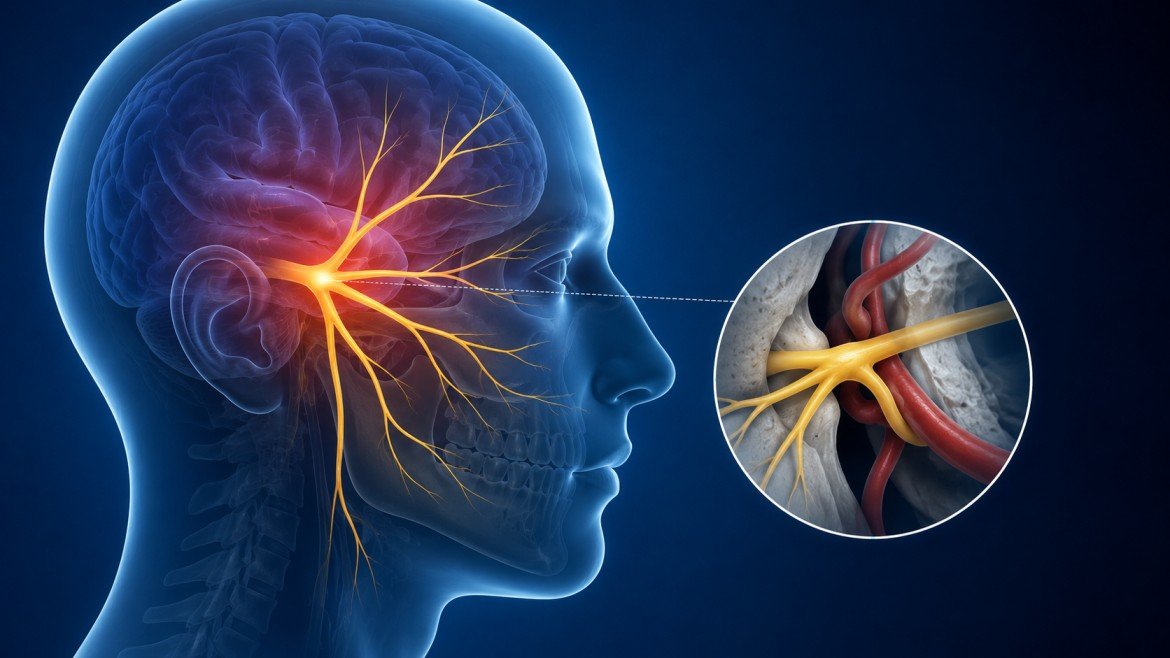
Trigeminal neuralgia is a chronic pain condition affecting the trigeminal nerve, the major sensory nerve of the face. Pain usually occurs on one side in intense attacks.
The pain may feel stabbing or shooting.
Symptoms of Trigeminal Neuralgia
Typical symptoms include:
- Sudden, severe facial pain on one side.
- Electric-shock-like or stabbing sensations.
- Pain involving the cheek, jaw, teeth, gums, lips or around the eye.
- Attacks triggered by eating, talking, shaving, brushing teeth or light touch.
A key clue is a trigger such as brushing teeth or touch.
What Causes Trigeminal Neuralgia?
For many people, there is a blood vessel that irritates the trigeminal nerve as it exits from the brain stem. This irritation will eventually lead to nerve damage because its protective lining gets affected, thus resulting in pain.
Some other possible causes may be multiple sclerosis, tumors, or any structural problems. In some cases, there are no known causes for the pain. MRI can be done to check for these problems.
How Is Trigeminal Neuralgia Diagnosed?
There is no single blood test that confirms the condition. Diagnosis combines pain history, trigger pattern, neurological examination and imaging.
A typical diagnostic process is:
- Describe the pain: location, duration, severity and whether it feels electric or shock-like.
- Identify triggers: note whether chewing, speaking, touching or cold air provokes attacks.
- Undergo neurological examination: the clinician checks facial sensation and nerve function.
- Consider MRI: imaging can identify compression or secondary causes.
- Review alternatives: dental disease, sinus problems, temporomandibular disorders and other facial pain conditions may need exclusion.
Trigeminal Neuralgia Treatment Options
Treatment depends on the cause, severity, health and response to medication. Medication is generally tried before procedures.
1. Medicines
Carbamazepine and oxcarbazepine are commonly used first-line medicines. Other options may include gabapentin, pregabalin, lamotrigine or baclofen when appropriate. Doses are adjusted gradually, with monitoring for dizziness, drowsiness, nausea or confusion. Carbamazepine can cause serious reactions in susceptible people, so medical supervision is essential.
2. Microvascular Decompression
In case studies show that the blood vessels are compressing the nerves, then microvascular decompression is a possible treatment. This is where the surgeon will surgically isolate the blood vessel from the trigeminal nerve.
The goal of MVD is to take away the source of irritation on the nerve, without damaging the feeling in your face. However, complications of this surgery can include loss of hearing, weakness, numbness, and even stroke.
3. Minimally Invasive Procedures
Alternative treatments which may be considered for those individuals who do not qualify for MVD are radiofrequency rhizotomy, balloon compression, and glycerol rhizotomy. The pain is reduced by injuring the nerves transmitting the pain signal.
This procedure may be fast-acting but there may be some numbness and the return of the pain may occur.
4. Stereotactic Radiosurgery
Stereotactic radiosurgery, including Gamma Knife treatment, delivers focused radiation to the trigeminal nerve without an open operation. Pain relief may take weeks, and some patients experience facial numbness. It may suit patients who cannot undergo open surgery.
Treatment Comparison
| Option | Main approach | Important consideration |
| Medication | Suppresses abnormal nerve firing | Side effects and possible loss of effectiveness |
| MVD | Relieves vascular compression | More invasive; potential surgical risks |
| Rhizotomy | Disrupts pain fibers | Numbness and recurrence are possible |
| Radiosurgery | Focused radiation | Relief may be delayed |
Common Mistakes to Avoid
- Assuming repeated facial pain is always a dental problem.
- Taking prescription nerve medicines without medical supervision.
- Stopping medication suddenly because pain improves.
- Choosing surgery without understanding the cause and MRI findings.
- Expecting every treatment to provide permanent relief.
Pro Tips for Patients
Keep a simple pain diary for one to two weeks. Record pain location, duration, triggers, medicines and side effects. This can help assessment.
Ask whether vascular compression is present, what the treatment aims to achieve, what sensory changes may occur and what happens if pain returns.
When Should You See a Specialist?
Seek evaluation when facial pain is severe, recurrent, triggered by normal activities or mistaken for dental pain. New facial numbness, weakness, vision changes or other neurological symptoms deserve prompt assessment.
Conclusion
Successful Trigeminal Neuralgia Treatment requires the recognition of the pattern of pain, and the cause of it where appropriate. Drug therapy manages the condition in most patients; MVD, rhizotomy, and radiosurgery come into play where drug management is ineffective or intolerable. There isn’t any one treatment that suits everybody. A neurosurgeon or neurologist can weigh up the pros and cons in each case.
If recurring episodes of electrical shock sensations in the face disrupt your life, get evaluated by a neurological professional. Early and accurate identification of the problem will save you from having unnecessary interventions performed.

Dr. Rahul Gupta is Senior Director and Head of Neurosurgery at Fortis Hospital, Noida, with over 20 years of experience in the assessment and management of brain, spine, and nerve disorders. His clinical practice includes minimally invasive brain and spine surgery, brain tumour management, neurovascular procedures, and other neurosurgical treatments. Treatment recommendations are based on each patient’s diagnosis, medical history, and individual clinical needs.